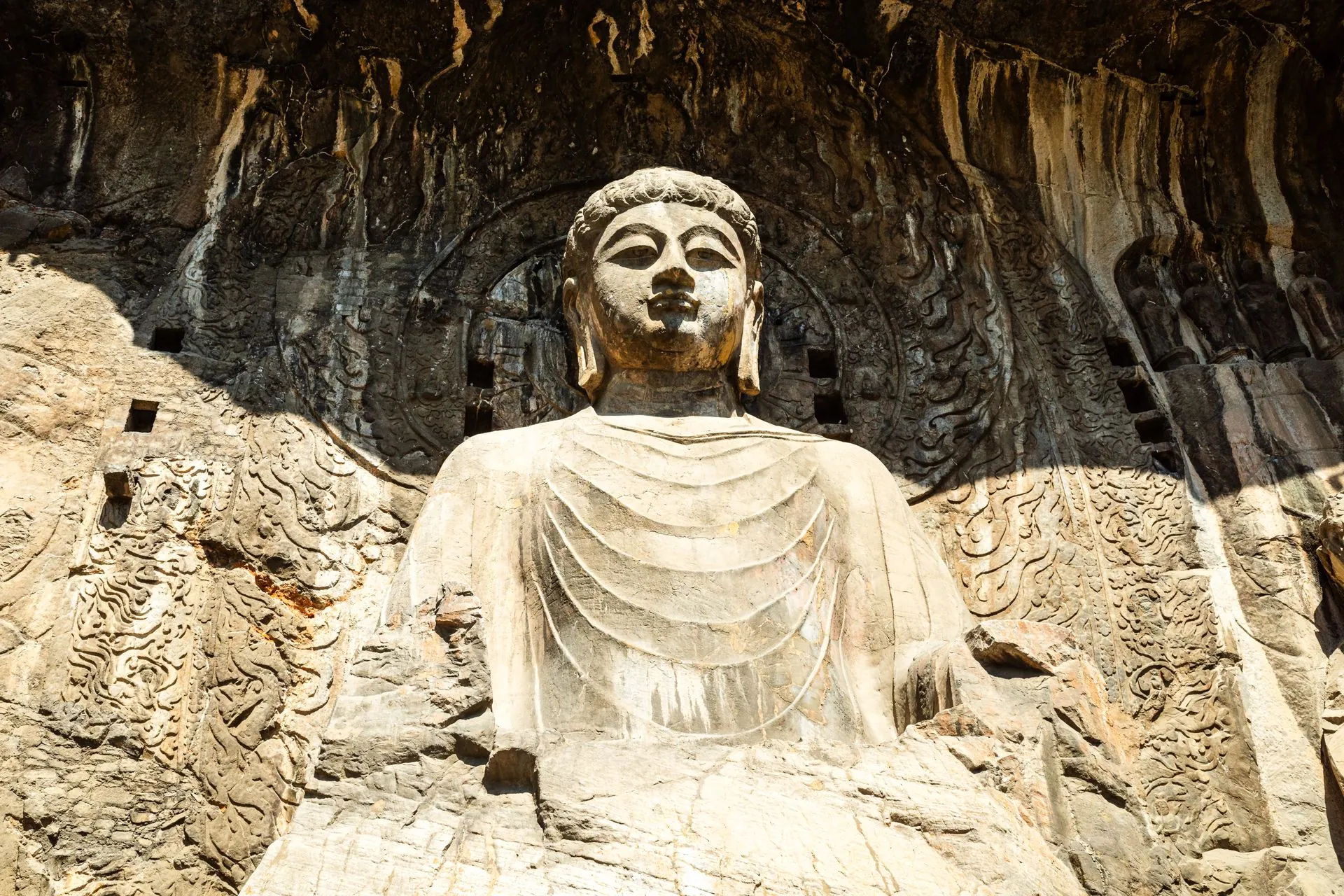
Longmen Shiku · Luoyang, Henan · 493 CE onward
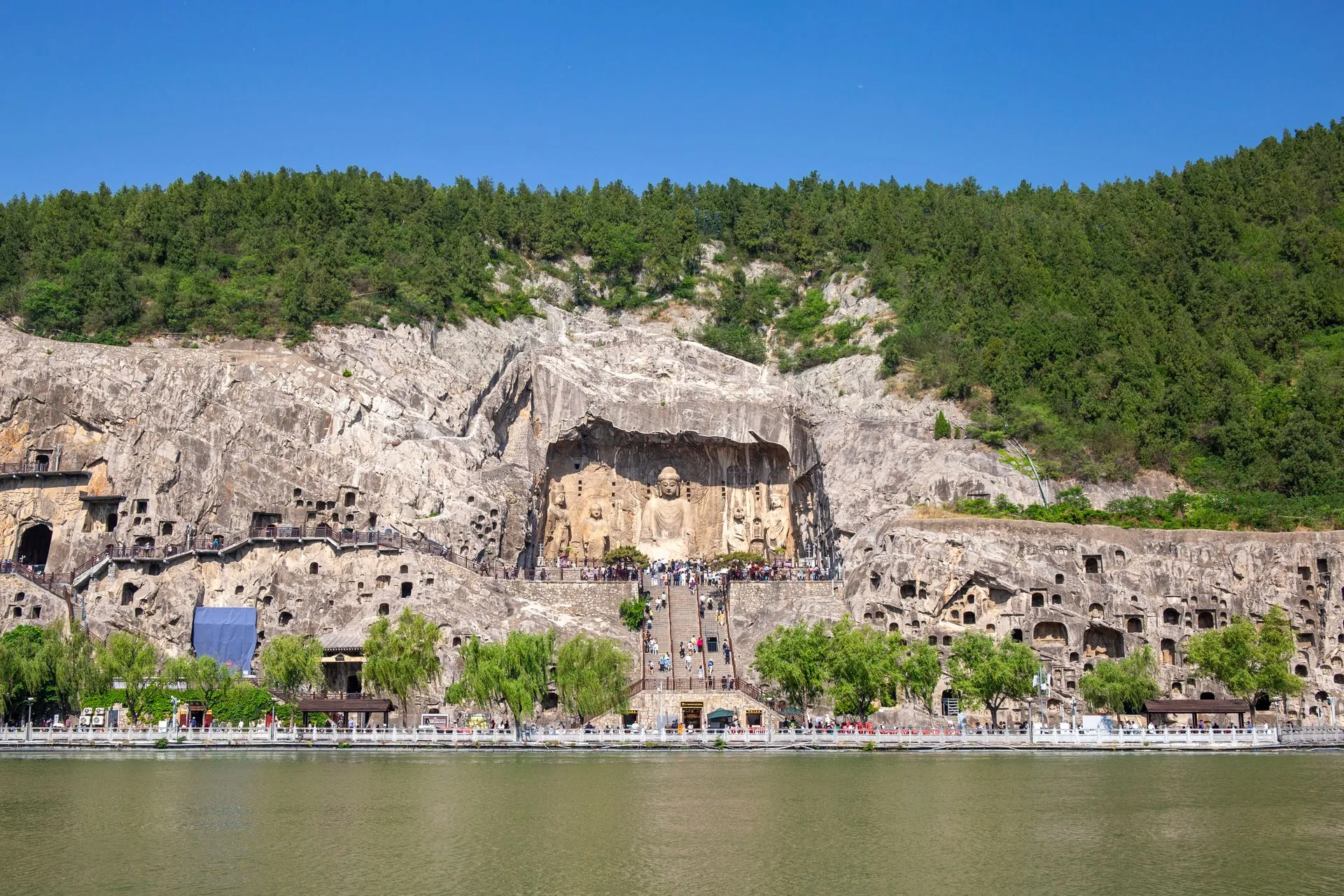
The Longmen Grottoes are one of the finest examples of Chinese Buddhist cave art, with more than 2,300 caves and niches carved into a 1-kilometer limestone cliff along the Yi River. Work began in 493 CE when the Northern Wei dynasty moved its capital to Luoyang and continued for over 400 years through the Tang dynasty. The site contains nearly 110,000 Buddhist statues, 60 stupas, and 2,800 inscriptions — the largest collection of ancient calligraphy in China.
The Longmen Grottoes were carved continuously from 493 CE to the late Tang dynasty, making them the longest-running cave project in Chinese history. Work began the moment the Northern Wei court moved its capital from Datong to Luoyang in 493 CE, and the earliest caves — led by Guyang Cave — show the transition from the massive, austere Buddhas of Yungang to slimmer figures with Chinese facial features.
The Tang dynasty contributed the majority of the site's 2,300 caves. Sponsorship was not limited to emperors: court ladies, generals, and merchants funded niches, and their dedicatory inscriptions — 2,800 in total — form the largest collection of ancient calligraphy in China. The famous Nineteen Steles of Longmen, recorded since the Tang, made the site a pilgrimage destination for calligraphers centuries before it became a tourist site.
The Fengxian Temple, completed in 675 CE, is the largest open-air cave at Longmen — a horseshoe-shaped amphitheater cut into the cliff rather than a tunnel. Its centerpiece, the seated Vairocana Buddha, stands 17.14 meters tall with ears 1.9 meters long; the figure and its attendants — two disciples, two bodhisattvas, and two guardian kings — were carved over roughly 20 years starting around 651 CE.
The project's principal patron was Empress Wu Zetian, who contributed 20,000 strings of cash — traditionally described as her cosmetics allowance — to the construction. Contemporaries described Wu as having 'a face like the Buddha's', and the Vairocana's serene, full-faced smile differs markedly from earlier masculine Tang Buddhas. The combination of imperial patronage and cliff-side engineering makes Fengxian the summit of Tang stone sculpture.
Four caves reward close study. Guyang Cave (begun 493 CE) is the earliest and most important Northern Wei cave at Longmen — its 800+ inscribed niches record the elite families who followed the court south from Datong, and its slender Buddhas mark the birth of a fully Chinese sculptural style. Binyang Central Cave (begun 505 CE) preserves a complete carved stone facade imitating a timber hall, with an arched doorway and roof ridge. The Binyang South Cave and the Wei-character steles beside it document the evolution of Northern Wei calligraphy over half a century.
The Lotus Cave (Lianhua Dong), named for the huge lotus carved in its ceiling, and the 1,000-Buddha niche of the Tang period show how later patrons filled the cliff with repetitive votive images. The Wanfo Cave ('Ten Thousand Buddhas') of 680 CE, sponsored by Wu Zetian's nephew, continues the pattern at imperial scale. Together these caves demonstrate that Longmen was not one project but 400 years of layered patronage — emperors, empresses, monks, officials, and merchants each adding their mark to the same kilometer of cliff.
Longmen preserves 2,800 stone inscriptions — the largest and most important collection of ancient calligraphy in China. The dedicatory texts carved beside each niche record names, dates, and motives of donors, offering a unique social history of four centuries of Buddhist patronage. They are also a living museum of Chinese writing: the Wei steles document the transition from clerical to regular script, while the Tang inscriptions showcase the mature kaishu of the empire's finest calligraphers.
Because ink-rubbing of these steles was practiced for over a millennium, Longmen's inscriptions shaped calligraphy education across East Asia. The so-called 'Longmen Twenty' (Longmen Ershi Pin) — twenty celebrated stele inscriptions — have been standard copy models for calligraphers in China, Japan, and Korea since the Qing dynasty. This calligraphic legacy is a major reason Longmen, unlike most cave sites, attracted scholarly pilgrims long before modern tourism.
Best Time to Visit
April-May or September-October; avoid Chinese national holidays
Photography Tips
Fengxian Temple at sunrise when the cliff face catches golden light
How to Get There
High-speed rail to Luoyang Longmen Station, then bus 67 or taxi to the site
The official count is nearly 110,000 Buddhist statues distributed across 2,300+ caves and niches, together with 60 stupas and 2,800 inscriptions — the largest collection of ancient calligraphy in China, including the famous Nineteen Stele of the Longmen style.
Tradition says yes — Wu Zetian, who contributed 20,000 strings of cash to the project, was described by contemporaries as having a face like the Buddha's. The serene, feminine features of the 17-meter Vairocana at Fengxian Temple differ markedly from earlier masculine Tang Buddhas, a change many scholars attribute to imperial patronage.
Both are UNESCO sites but they tell different stories. Yungang (5th century, near Datong) preserves colossal imperial Buddhas in carved-out caves and shows heavy Indian-Central Asian influence. Longmen (5th-8th century, Luoyang) spans four centuries of Chinese style, peaks in the open-air Fengxian Temple, and is far easier to combine with a visit to Xi'an.